
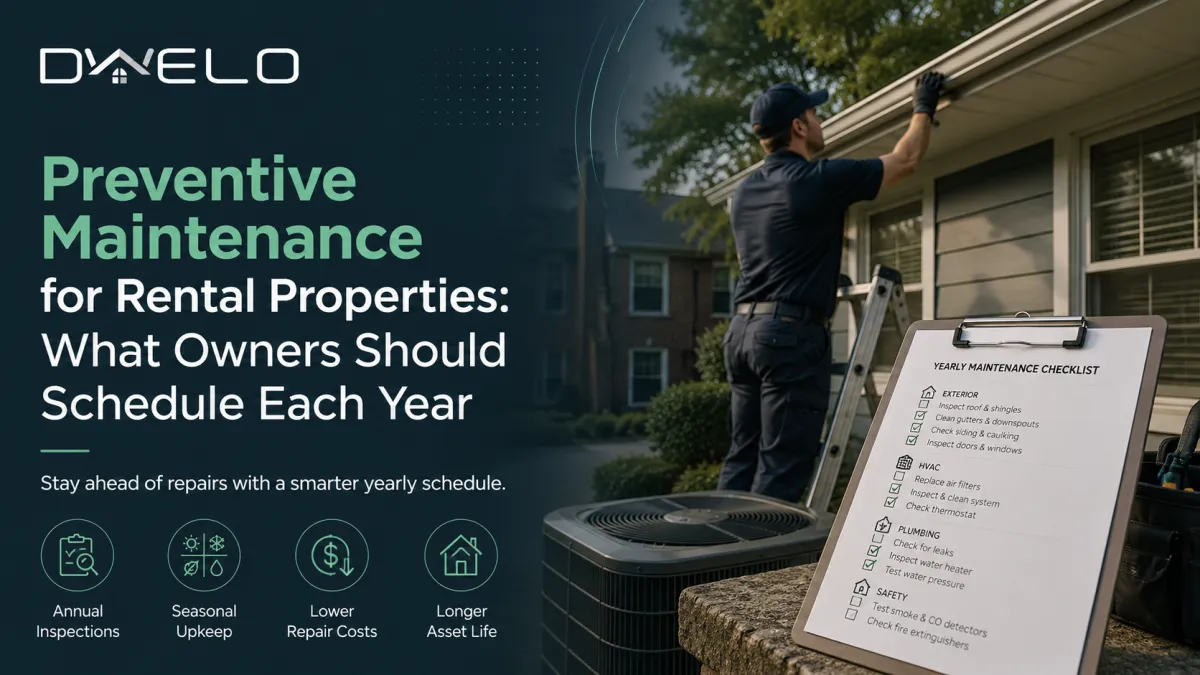
Preventive Maintenance for Rental Properties: What Owners Should Schedule Each Year
Most rental property expenses don't arrive without warning. They arrive because a warning was missed.
The water heater that failed in November showed signs of sediment buildup months earlier. The roof that leaked after a summer storm had cracked flashing that a trained eye would have caught in the spring. The HVAC system that broke down during a South Carolina heat wave in August was last serviced two summers ago and has been running on borrowed time ever since.
Preventive maintenance for rental properties isn't about spending more money; it's about spending it at the right time, in the right amounts, before small problems become expensive ones. For property owners in Charleston, Columbia, Mount Pleasant, and across South Carolina, a structured annual maintenance schedule is one of the most effective tools available for protecting the long-term value of a rental investment.
This guide breaks down exactly what owners should be scheduling, and when, across each season of the year.
Why a Scheduled Approach Changes Everything
The difference between reactive maintenance and preventive maintenance is the difference between managing your property and being managed by it. Reactive owners wait for something to break, then scramble to find a contractor, coordinate access with the tenant, and absorb a repair cost that is almost always higher than it needed to be.
Owners who operate preventively set the terms. They know what's coming, budget for it appropriately, and address issues before they escalate. Their tenants experience fewer disruptions. Their properties stay in better condition. Their repair bills, averaged over time, are measurably lower.
South Carolina's climate adds a layer of urgency to this approach. High humidity, intense summer heat, hurricane season, and occasional winter freezes all create specific maintenance pressures that a well-structured schedule accounts for in advance. The owners who struggle most are those who ignore seasonal timing entirely — treating maintenance as something to deal with only when a tenant calls.
The Annual Preventive Maintenance Schedule: Season by Season
Spring (March – May): Reset and Inspect After Winter
Spring is the most critical maintenance window of the year for South Carolina rental properties. It's the time to assess any winter damage, prepare systems for summer's demands, and get the property in peak condition before the high-activity leasing season begins.
HVAC System Service: Before temperatures climb, schedule a professional HVAC inspection and servicing. This means cleaning coils, checking refrigerant levels, inspecting electrical connections, testing thermostat calibration, and replacing filters. An HVAC system that hasn't been serviced going into a South Carolina summer is a liability; the heat will expose every weakness, and a breakdown mid-season is both costly and damaging to the tenant relationship.
Roof and Gutter Inspection: Winter wind, rain, and debris take a toll on roofing materials and gutters. Spring is the time to inspect for cracked or missing shingles, damaged flashing around vents and chimneys, and gutter systems that have pulled away from the fascia or are clogged with debris. Catching these issues before the summer storm season is critical; a compromised roof during a South Carolina thunderstorm can cause significant water intrusion within hours.
Exterior Inspection: Walk the exterior of the property and look for cracks in the foundation, damaged window seals, peeling caulk around doors and windows, and any signs of pest intrusion. Spring is also prime termite season in South Carolina, making this the right time to coordinate an annual pest inspection if not already on contract.
Plumbing Check: Inspect exposed pipes, check under sinks and around water heaters for signs of slow leaks, and test water pressure throughout the unit. Any minor drips or slow-draining fixtures should be addressed now; these are the kinds of items that tenants often live with rather than report, and they quietly worsen over time.
Summer (June – August): Monitor, Protect, and Prepare for Storms
Summer in South Carolina is operationally demanding. Heat stress on mechanical systems, the peak of hurricane season, and high occupancy from lease renewals all converge in these three months.
HVAC Filter Replacement: Air conditioning systems run almost continuously during South Carolina summers. Filters should be replaced every 30 to 60 days during this period, not quarterly. A clogged filter forces the system to work harder, increases energy costs, degrades air quality, and accelerates wear. This is a low-cost, high-impact maintenance task that protects the system and improves tenant comfort simultaneously.
Hurricane and Storm Preparedness: For coastal properties in particular, and increasingly for inland properties as well, summer requires active storm preparedness. Ensure that any exterior fixtures, fencing, or shutters are secured. Confirm that the property has functioning smoke and carbon monoxide detectors. Check that any sump pumps are operational. Document the property's current condition with dated photographs so that post-storm damage assessments are accurate.
Landscaping and Drainage: Overgrown landscaping creates pest harborage, blocks drainage pathways, and can cause structural damage if tree limbs or roots are left unchecked. Summer growth is rapid in South Carolina, and scheduling regular landscaping maintenance keeps the property's exterior presentable and prevents drainage problems during heavy rainfall.
Fall (September – November): Pre-Winter Preparation and Annual Inspection
Fall is the ideal time to conduct the property's formal annual inspection, prepare mechanical systems for the cooler months ahead, and document the property's condition, particularly if a tenancy is ending or renewing.
Annual Property Inspection: A thorough walk-through of the entire property, interior and exterior, should be conducted each fall. This documents the current condition of every room, appliance, fixture, and surface. It creates a baseline for security deposit disputes if applicable, surfaces any developing issues the tenant may not have reported, and provides the owner with a comprehensive picture of the property's condition heading into the year's end.
Dwelo's routine property inspections are conducted with this level of thoroughness, not as a checkbox exercise but as a genuine assessment of property condition that protects both owner and tenant.
Heating System Check: Even in South Carolina's mild climate, heating systems need annual attention before they're needed. An HVAC system that hasn't been checked since spring should be inspected for heating function, duct integrity, and filter condition before temperatures drop.
Water Heater Inspection: Water heaters typically have a lifespan of eight to twelve years. An annual inspection, checking the anode rod, flushing sediment, testing the pressure relief valve, and looking for signs of corrosion, can extend the life of the unit significantly and prevent unexpected failures during peak demand periods.
Caulking, Sealing, and Weatherproofing: Inspect and refresh caulking around windows, doors, and exterior penetrations. Even South Carolina winters can cause drafts that affect tenant comfort and energy costs. Proper sealing is a low-cost task that pays dividends in both tenant satisfaction and reduced heating costs.
Winter (December – February): Protect, Monitor, and Plan
South Carolina's winters are mild compared to much of the country, but freeze events do occur, particularly in the Upstate region around Greenville and Spartanburg. And even along the coast, winter brings distinct maintenance considerations.
Pipe Freeze Prevention: For properties with exposed plumbing in unconditioned spaces, crawl spaces, garages, or exterior walls, freeze prevention is essential during cold snaps. Insulating exposed pipes, ensuring tenants know how to respond during a freeze warning, and confirming that the heating system is functional in all areas of the property are the key actions here.
Fireplace and Chimney Inspection: For properties with wood-burning or gas fireplaces, an annual chimney inspection and cleaning before winter use is a safety requirement, not an optional service. Creosote buildup and chimney obstructions are a leading cause of residential fires.
Year-End Maintenance Budget Review: Winter is the time to review how actual maintenance expenditures compare to the year's budget, identify any deferred items that need to be addressed before spring, and plan capital improvements for the coming year. Dwelo's financial reporting for rental owners gives property owners a clear, itemized view of maintenance costs alongside rental income, making this annual review straightforward rather than a paperwork exercise.
What Self-Managing Owners Consistently Miss
Even well-intentioned owners who understand the value of preventive maintenance struggle with consistent execution. The most common gaps include:
No formal inspection schedule: Without a structured calendar, routine inspections get postponed indefinitely when life gets busy. Weeks become months, and early-stage issues become serious ones.
Relying on tenants to report everything: Tenants report urgent problems. They tolerate slow drains, minor leaks, drafty windows, and flickering lights, often for months, before mentioning them, if they mention them at all. Routine inspections close this gap.
Lack of reliable contractor relationships: When something needs attention, the ability to act quickly depends entirely on having trusted contractors available. Building and maintaining those relationships takes years. Dwelo's property maintenance and repair services bring an established network of qualified vendors to every property we manage, so owners don't scramble when something needs attention.
Poor documentation: Without dated inspection records and maintenance logs, owners have no defensible record of property condition at any given point in time. This creates exposure in security deposit disputes, insurance claims, and legal proceedings.
Real-World Scenarios: Preventive Maintenance in Action
Scenario 1: The Greenville Property That Avoided a Mold Claim
During a fall inspection of a Greenville rental, Dwelo identified moisture intrusion in a bathroom that hadn't been reported by the tenant. The source, a failed caulk seal around the shower, was straightforward to fix, but the timing was critical. Left undiscovered for another three to four months, the moisture would have created conditions for mold growth in the wall cavity. The repair cost was minimal. The remediation that would have followed was not.
Scenario 2: The Charleston Coastal Property That Survived Hurricane Season
An Isle of Palms property owner had historically deferred storm preparedness until a storm was already in the forecast. After transitioning to Dwelo's management, storm preparedness became a standard part of the summer maintenance schedule, exterior fixtures secured, documentation updated, and drainage pathways cleared. The property came through a significant late-summer storm with minor cleanup required and no structural damage.
Scenario 3: The Columbia Landlord Who Finally Understood the Numbers
A Columbia property owner managing two rentals on their own had no clear picture of annual maintenance costs. Expenses arrived unexpectedly, budgeting was reactive, and year-end financial reviews were stressful. Under Dwelo's full-service property management in South Carolina, maintenance was scheduled, documented, and reported clearly through monthly owner statements. The owner gained visibility, control, and the ability to plan, instead of simply reacting.
The Financial Logic of Preventive Maintenance
The math behind preventive maintenance is consistent and compelling. A small investment in scheduled upkeep produces a disproportionately large reduction in emergency repair costs. It also produces measurable gains in tenant retention, which reduces vacancy costs, re-marketing expenses, and the wear that comes with tenant turnover itself.
A property that is visibly maintained and systematically inspected also holds its market value more effectively over time, both in rental rates and in resale potential. For property owners thinking about their investment over a five, ten, or twenty-year horizon, this cumulative effect is significant.
Let Dwelo Manage the Schedule — So You Don't Have To
A preventive maintenance schedule only works if it's actually executed. For many property owners, the barrier isn't knowledge; it's time, systems, and reliable contractor access. That's precisely where professional property management changes the equation.
Dwelo manages the full maintenance cycle for South Carolina rental properties: scheduling inspections, coordinating contractors, documenting conditions, tracking costs, and reporting clearly to owners. You know what's happening with your property, you're never caught off guard by preventable repairs, and your investment is protected by a team with the systems and experience to execute consistently.
Real estate agents whose clients own investment properties in South Carolina can learn more about our agent referral program. We're a trusted resource for investor clients who need professional management they can count on.
Ready to put a proper maintenance schedule in place for your rental property? Schedule a free consultation with Dwelo, and let's build a plan that protects what you've invested.
Dwelo Property Management provides comprehensive rental property management services across South Carolina, including Charleston, Mount Pleasant, Isle of Palms, Columbia, Greenville, Spartanburg, and surrounding communities.


