
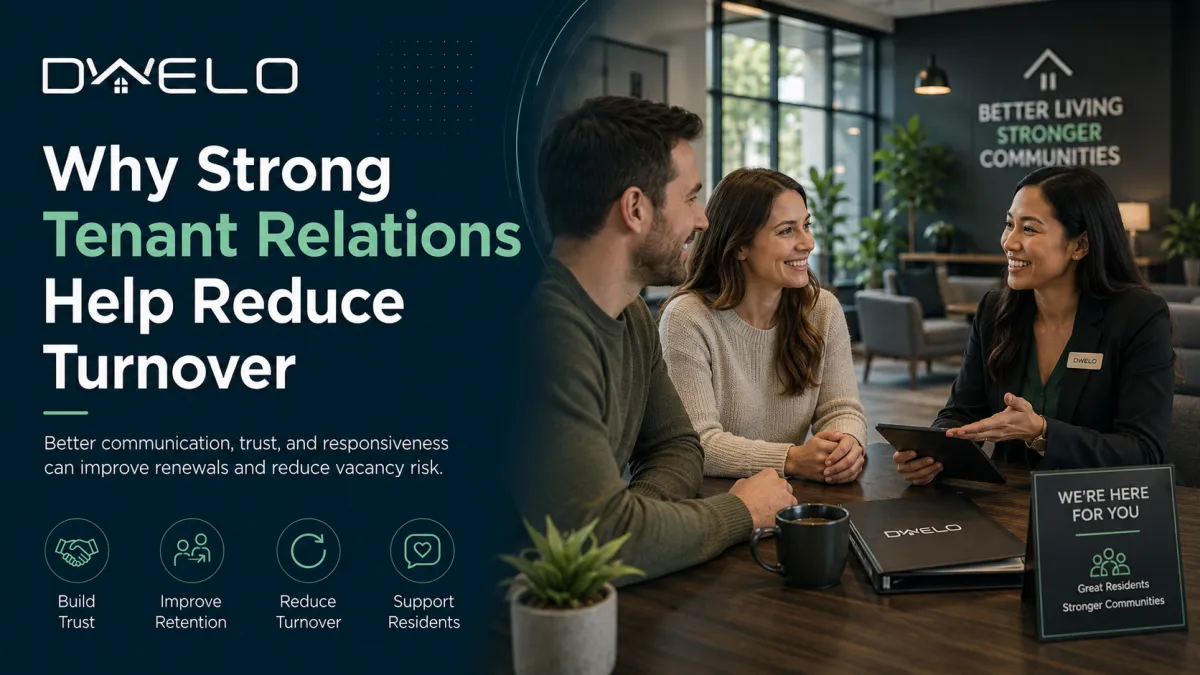
Why Strong Tenant Relations Help Reduce Turnover
High tenant turnover silently drains rental income. Discover how strong tenant relations reduce vacancy, protect cash flow, and build lasting investment value in South Carolina.
Every time a tenant moves out, a cost meter starts running. Vacancy days with no income. Cleaning and repairs to return the unit to marketable condition. Professional photography, listing fees, and advertising spend. Time invested in screening new applicants. A leasing period during which the property sits empty, and carrying costs continue. When all of it is added together, a single tenant turnover event typically costs a property owner the equivalent of one to three months of rental income, sometimes more, depending on the condition in which the unit is left and the length of the vacancy.
Now multiply that by a pattern. An owner whose tenants routinely leave after one lease term, because the experience of living in the property didn't inspire them to stay, is not just dealing with occasional vacancy. They are funding an ongoing cycle of turnover costs that quietly and consistently erodes the return on their investment.
The solution to this cycle isn't a better marketing strategy or a more competitive rental price. It begins much earlier and runs much deeper: strong tenant relations that reduce turnover start on the day a tenant moves in and are sustained through every interaction that follows. For South Carolina property owners, understanding the connection between how tenants are treated and how long they stay is one of the most financially consequential insights in property management.
What Tenant Turnover Actually Costs South Carolina Property Owners
Before examining how tenant relations drive retention, it's worth quantifying what poor retention actually costs, because many owners underestimate it significantly.
Direct Vacancy Costs
Every day a unit sits vacant is a day of lost rental income. In the Charleston market, where monthly rents for well-positioned properties can range from $1,500 to $3,000 or more, depending on size and location, a 45-day vacancy between tenants represents $2,250 to $4,500 in lost income, before a single expense is counted.
Turnover and Restoration Costs
When a tenant vacates, the property almost always requires some level of work before it can be re-listed. Cleaning, repainting, carpet cleaning or replacement, and minor repairs are routine. If the departing tenant caused damage, those costs escalate further. For an owner absorbing these expenses every 12 months because tenants consistently don't renew, the cumulative impact over five years is substantial.
Re-Marketing and Re-Leasing Costs
Advertising the property, coordinating showings, screening applicants, drafting a new lease, and managing move-in administration all require time and resources. These costs are incurred fresh with every new tenancy. Extending an existing tenancy through renewal eliminates them.
The Hidden Cost of Uncertainty
Beyond the direct financial expenses, turnover creates operational uncertainty. An owner who doesn't know whether their tenant will renew until the last possible moment cannot plan maintenance schedules, capital improvements, or financial projections with any confidence. Stable, long-term tenancies create the operational predictability that allows owners to manage their investment proactively rather than reactively.
The Connection Between Tenant Relations and Retention
Tenants leave for many reasons: life circumstances change, they relocate for work, they buy a home, or they simply need a different size or location. These departures are outside an owner's control. But a significant percentage of non-renewals are driven by something entirely within the owner's control: the quality of the tenant's experience living in the property.
Research in residential property management consistently points to the same finding: the most powerful predictor of tenant renewal isn't rent price or property amenities. It's the tenant's sense of whether the landlord or property manager is responsive, respectful, and genuinely interested in their well-being as a resident.
A tenant who submits a maintenance request and receives a prompt, professional response feels valued. A tenant whose maintenance request disappears into a queue and is followed up on only after repeated calls feels dismissed. That distinction, repeated across months of tenancy, is what drives the renewal decision.
This is the core of tenant relations in professional property management: every interaction between a management company and a tenant is either building or eroding the tenant's inclination to stay. The accumulation of those interactions, handled well or poorly, determines whether the owner faces a renewal or a vacancy.
What Strong Tenant Relations Look Like in Practice
Strong tenant relations are not a single program or policy. It is a standard of professional conduct embedded in every stage of the tenancy, from move-in to maintenance to renewal. Here is what that looks like across each touchpoint.
Professional, Respectful Onboarding
The tenant's experience begins before they move in. A well-managed move-in process, clear communication about what to expect, a thorough and documented move-in inspection, a clean and well-prepared unit, and accessible contact information for maintenance and questions communicate immediately that this is a professionally managed property and that the tenant's experience matters.
First impressions in property management are durable. A tenant who moves into a property feeling welcomed and informed starts the tenancy with goodwill toward the management team. A tenant who moves in to find unresolved issues, unclear processes, and poor communication starts the tenancy with doubt, and that doubt rarely resolves itself over time.
Responsive, Documented Maintenance
The single most impactful driver of tenant satisfaction in rental property management is maintenance responsiveness. Dwelo's property maintenance and repairs process is built around prompt response, professional execution, and clear communication with the tenant at every stage, from acknowledging the request to confirming the scheduled repair, to following up that the work was completed to the tenant's satisfaction.
This responsiveness is not just about fixing things quickly. It's about communicating to the tenant that their home is being cared for and that their comfort is a priority. That communication, sustained consistently, is one of the most powerful retention tools available.
Clear, Consistent Communication
Tenants who don't know how to reach their property manager, who receive inconsistent responses, or who feel they are being ignored when they raise a concern are tenants who are actively shopping for alternatives, often without signaling their dissatisfaction until they submit a notice to vacate.
Professional property management establishes clear, reliable communication channels and maintains them consistently throughout the tenancy. Tenants know exactly how to submit a maintenance request, who to contact with a question, what to expect in response time, and how management will engage with them if an issue arises. This clarity reduces friction, reduces misunderstandings, and builds the kind of trust that makes renewal feel natural rather than something a tenant has to actively decide in favor of.
Proactive Lease Renewal Engagement
Tenant retention doesn't happen automatically at renewal time; it is built throughout the tenancy and then confirmed with a well-managed renewal process. Reaching out to a tenant well in advance of their lease expiration, offering a clear renewal proposal, and engaging with any questions or concerns they raise signals that their continued tenancy is valued.
Dwelo's lease administration services include proactive renewal management, tracking expiration dates, initiating renewal conversations at the right time, and handling the documentation of any renewal or adjustment in terms. An owner whose renewal offer arrives with a week left on the lease is communicating urgency and disorganization. An owner whose renewal outreach begins 90 days before expiration is communicating professionalism and a genuine interest in continuing the relationship.
Fair, Professional Conflict Resolution
Not every tenancy is without friction. Lease violations, maintenance disputes, noise complaints, and late payment situations arise even in well-managed properties. How these situations are handled has a direct bearing on the tenant's decision to renew, and on the owner's legal protection if the situation escalates.
Professional conflict resolution means responding to concerns promptly, communicating clearly and without condescension, following the proper legal processes where applicable, and resolving issues in a way that is fair to both parties. Tenants who feel that a conflict was handled professionally, even if the resolution wasn't entirely in their favor, are far more likely to maintain a productive tenancy than those who feel dismissed, talked over, or treated unfairly.
Real-World Scenarios: Tenant Relations in Action
Scenario 1: The Maintenance Response That Saved a Tenancy
A long-term tenant in a Mount Pleasant rental submitted a maintenance request for a persistent issue with a bathroom exhaust fan, not an emergency, but an ongoing nuisance. Under previous management, this type of request had been deprioritized, and the tenant had grown frustrated. Under Dwelo's management, the request was acknowledged within 24 hours, scheduled within the week, and completed with a follow-up to confirm the tenant was satisfied. The tenant, who had privately been considering a move, renewed for another year without raising the possibility of leaving. The cost of the repair was a fraction of a single month's vacancy.
Scenario 2: The Renewal Conversation That Caught a Concern Early
During proactive renewal outreach for a Columbia rental, Dwelo's team learned through the renewal conversation that the tenant had a concern about a noise issue from a neighboring unit that had not been formally reported. By surfacing that concern during the renewal process, addressing it directly, and following through with a documented resolution, the management team converted a tenant who was leaning toward leaving into a tenant who renewed with confidence. Without that proactive outreach, the concern would have remained unaddressed, and the owner would have faced a vacancy.
Scenario 3: The Portfolio Owner Who Stopped Treating Turnover as Normal
A Greenville property owner with four rentals had accepted annual tenant turnover as a normal cost of business. After transitioning to Dwelo's full-service property management in South Carolina, the combination of professional tenant placement, responsive maintenance, and consistent communication produced a significant improvement in renewal rates across the portfolio. The owner's vacancy-related costs fell materially, and the operational rhythm of the properties stabilized in a way that allowed him to plan proactively for the first time. Turnover, he realized, had not been inevitable; it had been the predictable consequence of a management approach that didn't prioritize the tenant experience.
Key Benefits of Strong Tenant Relations
Reduced Vacancy Costs: Long-term tenants eliminate the vacancy, turnover, and re-marketing costs that compound over time. Each renewal is a direct financial benefit that improves the property's net return.
Better Property Condition: Tenants who feel respected and well-managed tend to treat their homes with greater care. Pride in where you live is strongly correlated with how well you maintain it, and properties occupied by long-term, satisfied tenants typically show less wear than those with frequent turnover.
Fewer Disputes and Legal Complications: Strong tenant relations reduce the frequency and intensity of conflicts. Fewer conflicts mean fewer legal notices, fewer escalation situations, and a lower overall legal risk profile for the owner.
Stable, Predictable Income: A portfolio of long-term, reliably paying tenants produces income that an owner can forecast and plan around. That predictability is a meaningful financial benefit, one that compounds over years of stable occupancy.
Owner Reputation and Referrals: Tenants who have a positive experience with a professionally managed property tell other people. In South Carolina's rental markets, particularly in smaller communities and coastal areas where word travels, a reputation for professional, responsive management attracts better tenants and makes future placements faster and easier.
Tenant Relations Is Where Property Management Becomes Property Investment
The eight pillars of property management marketing, maintenance, lease administration, rent collection, financial reporting, legal compliance, property operations, and tenant relations are interconnected. But tenant relations is the one that ties them all together. The tenant placement and screening that bring the right residents in set the foundation. The maintenance responsiveness, lease clarity, and professional communication that follow determine whether those residents stay.
An investment property managed in a way that tenants genuinely appreciate is not just a better financial performer in the short term. It is a more valuable asset in the long term, with lower carrying costs, higher occupancy rates, better physical condition, and a track record of stable tenancies that enhances the property's appeal to future buyers if and when the owner decides to sell.
Professional property management, at its best, is not just operational efficiency. It is the discipline of treating every tenant interaction as an investment in the long-term health of the asset, because that is exactly what it is.
Real estate agents in South Carolina with investment property clients can learn more about how Dwelo supports owners across every pillar of property management through our agent referral program, a straightforward way to add lasting value to client relationships.
Ready to build a rental portfolio where tenants stay, properties perform, and income is predictable? Schedule a free consultation with Dwelo, and let's talk about how professional tenant relations changes the long-term trajectory of your investment.
Dwelo Property Management provides comprehensive, full-service rental property management across South Carolina, including Charleston, Mount Pleasant, Isle of Palms, Columbia, Greenville, Spartanburg, and surrounding communities.


