
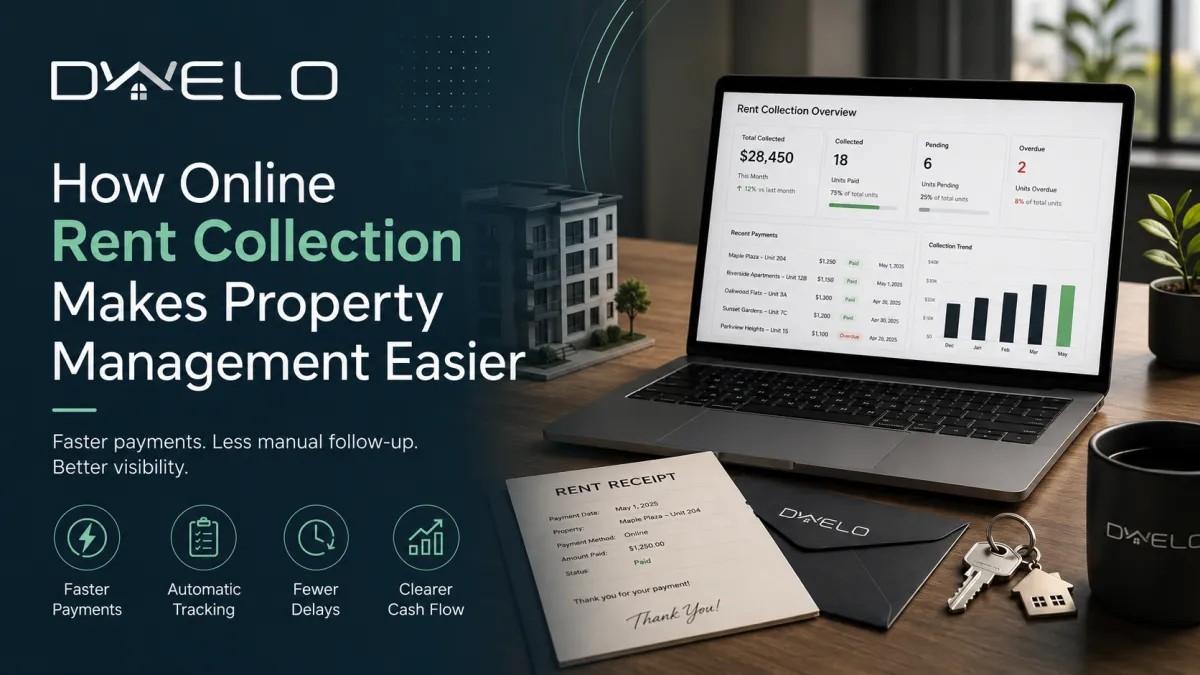
How Online Rent Collection Makes Property Management Easier
There is a version of rental property ownership that a surprising number of South Carolina landlords still live with every month: waiting on a paper check, following up with a tenant who forgot, driving to the bank before it closes, and then manually recording the payment in a spreadsheet before the cycle starts over again in 30 days.
It works, until it doesn't. A check that gets lost in the mail. A tenant who paid late but disputes the late fee because they claim they mailed it on time. An owner with five properties is trying to reconcile which checks arrived, which are still outstanding, and which tenants need a phone call. The administrative weight of traditional rent collection grows with every unit added to a portfolio, and it consumes time that property owners don't have to spare.
Online rent collection for rental property owners isn't a luxury upgrade. It's a fundamental shift in how rental income is managed, one that eliminates the friction of paper-based collection, creates clean documentation automatically, and gives both owners and tenants a more professional, reliable experience. For property owners across South Carolina, the difference between manual and digital rent collection is measurable in time, stress, and financial accuracy.
This blog breaks down exactly what that shift looks like, why it matters, and how professional property management makes it seamless.
The Problems With Traditional Rent Collection
Before understanding why online rent collection is transformative, it's worth being specific about what traditional collection actually costs property owners, beyond the obvious inconvenience.
Cash Flow Unpredictability
Paper checks introduce a delay into a process that depends on reliability. A check mailed on the first of the month may not clear until the fifth or sixth. For owners with mortgage payments tied to rental income, this gap creates unnecessary cash flow stress. Multiply it across multiple properties, and the unpredictability compounds quickly.
No Automatic Documentation
Every paper-based transaction requires manual recording. Rent received, date cleared, late fees assessed, partial payments logged, all of it falls on the owner to track and maintain. Errors in this record create problems downstream: inaccurate financial reporting, disputed payment histories, and difficulty substantiating claims if a tenancy ends in a dispute.
Inconsistent Late Fee Enforcement
Enforcing late fees on paper-based systems is awkward. Owners who feel uncomfortable with the conversation sometimes waive fees they're entitled to collect, establishing a precedent that undermines the terms of the lease. Others enforce inconsistently, sometimes charging, sometimes not, which creates both legal exposure and tenant resentment. Without a systematic process, late fee collection becomes a judgment call made under pressure rather than a consistent, professional procedure.
No Scalability
A single-property landlord can manage paper rent collection with moderate effort. An owner with three, five, or ten properties cannot. Traditional collection doesn't scale. Every additional unit adds another loop of the same manual process, and the time investment grows linearly with the portfolio, crowding out the higher-value activities that actually grow an investment.
What Online Rent Collection Changes
Shifting to digital rent collection through professional property management restructures not just the payment method but the entire ecosystem around it.
Automatic, Scheduled Payments
Online rent collection allows tenants to set up automatic recurring payments tied to the lease due date. Rent moves on the first without anyone having to remember, initiate, or chase. For tenants, this eliminates the risk of an accidental late payment. For owners, it creates a predictable, consistent payment timeline that supports accurate cash flow planning.
Real-Time Payment Visibility
Owners no longer need to wonder whether a payment has arrived. Online systems provide real-time visibility into payment status, received, pending, or outstanding, for every unit in a portfolio, accessible from anywhere. An owner traveling, living out of state, or simply managing a busy schedule has complete payment visibility without making a single phone call.
This is particularly valuable for out-of-state South Carolina property owners, a segment that represents a meaningful portion of Charleston and coastal market investors. Distance is no longer an operational disadvantage when rent collection is digitized and managed professionally.
Automatic Late Fee Application
When rent isn't received by the due date, online systems automatically apply late fees, exactly as specified in the lease. No conversation required. No judgment call in the moment. The fee applies consistently, every time, because the system executes the lease terms without human intervention. This consistency is not just efficient, it's legally defensible. It demonstrates that the owner enforces the lease uniformly, which matters if a dispute escalates.
Clean, Automatic Payment Records
Every transaction processed through an online rent collection system generates a timestamped, itemized record automatically. Payment date, amount, method, and any late fees collected are all documented without any manual data entry. These records integrate directly into financial reporting, making month-end reconciliation straightforward and year-end tax preparation dramatically simpler.
Dwelo's financial reporting for property owners is built on this foundation: clean transaction data that produces accurate, transparent owner statements every month without the owner having to compile anything themselves.
How Dwelo Manages Rent Collection for South Carolina Property Owners
Dwelo's rent collection services are designed to handle every stage of the collection process, from the moment rent is due to the moment funds are distributed to the owner, with professionalism, accuracy, and complete documentation.
Here's what that process includes in practice.
Setting Clear Expectations From Day One
Effective rent collection begins at the lease stage. Dwelo's lease administration services establish rent due dates, accepted payment methods, grace periods, and late fee structures in explicit, enforceable terms. Tenants understand the process from before they move in, and that clarity reduces the likelihood of missed payments or disputes about the fee application.
Tenant Onboarding for Online Payments
When a tenancy begins, tenants are onboarded to the online payment system with clear guidance on how to set up their account, schedule automatic payments, and access their payment history. A tenant who is set up for automatic payments from day one is a tenant who is far less likely to pay late, not because they're more responsible, but because the system does the work for them.
Consistent Follow-Through on Late Payments
When a payment is missed, the response process is consistent and professional. Late fees are applied automatically. Tenants receive prompt, formal communication. If non-payment continues, Dwelo follows the proper legal notice process under South Carolina law, the same structured approach outlined in our lease administration process, to protect the owner's position and move efficiently toward resolution.
This consistency matters enormously. An owner who handles late payments differently each month, sometimes following up firmly, sometimes letting it slide, trains tenants that the due date is negotiable. A property management company with systematic processes communicates that it isn't.
Owner Distributions and Reporting
Once rent is collected, Dwelo distributes owner proceeds on a reliable schedule alongside a clear monthly owner statement. The statement itemizes rental income received, maintenance expenses deducted, management fees, and any other activity for the period. No surprises. No manual reconciliation required.
Real-World Scenarios: The Difference It Makes
Scenario 1: The Multi-Property Owner Who Reclaimed His Weekends
A Columbia property owner with four rentals was spending several hours each month chasing payments, making bank deposits, and manually updating his records. After transitioning to Dwelo's full-service property management in South Carolina, rent collection became entirely hands-off. Payments were processed automatically, late fees applied without intervention, and a clean monthly statement arrived in his inbox, with not a single phone call to a tenant about rent in sight.
Scenario 2: The Out-of-State Owner Who Finally Had Clarity
A property investor based outside South Carolina owned a rental in Charleston and had been managing rent collection remotely, relying on check photos texted by the tenant, manually tracking deposits, and losing visibility whenever a payment was delayed. Under Dwelo's management, she gained real-time payment visibility through professional reporting, consistent on-time distributions, and the confidence that late payments were handled systematically, not ignored because they were inconvenient to address from a distance.
Scenario 3: The Landlord Whose Late Fee Policy Was Being Ignored
A Greenville landlord had a late fee clause in his lease, but rarely enforced it, finding the conversation uncomfortable. Tenants learned quickly that the due date was soft. When one tenant began paying five to seven days late consistently, the landlord had no established precedent for enforcement. After moving to professional management with an automated fee application, the pattern was corrected within a single billing cycle, because the system applied the lease terms without exception and without it feeling personal.
Key Benefits of Online Rent Collection Through Professional Management
Consistent, Predictable Cash Flow: Automated payments create a reliable income rhythm. Owners know when to expect distributions and can plan accordingly, rather than waiting to see what arrives.
Complete Payment Documentation: Every transaction is recorded automatically, timestamped, and accessible. This protects owners in disputes, simplifies tax preparation, and provides a clean financial record for the property.
Uniform Late Fee Enforcement: Fees apply automatically, every time, without exception. This enforces the lease professionally, reduces habitual late payments, and removes a source of ongoing stress from the owner relationship.
Scalability Across Any Portfolio Size: Whether you own one rental or fifteen, the process is identical. Online collection doesn't add administrative weight as a portfolio grows; it handles scale without requiring the owner to do more.
Improved Tenant Experience: Tenants who can pay online from their phone or computer, set up automatic payments, and access their own payment history have a better rental experience. Tenants with a better experience are more likely to renew, which reduces vacancy and protects rental income continuity.
Getting Paid Shouldn't Be the Hard Part of Owning Rental Property
The return on a rental investment is only as reliable as the process that delivers it. Every friction point in rent collection missed payments, manual tracking, inconsistent enforcement, and delayed deposits represents a gap between what your property should produce and what it actually does.
Professional rent collection through Dwelo closes those gaps. It replaces a manual, inconsistent, owner-dependent process with one that is systematic, documented, and fully managed, so the income your property generates arrives on time, every time, with a clear record attached.
If you're a real estate agent in South Carolina with investor clients ready to improve how their properties operate, you can learn more about working with Dwelo through our agent referral program. We make it easy to add value for clients who need management they can count on.
Ready to make rent collection the easiest part of owning a rental property? Schedule a free consultation with Dwelo, and let's talk about how we put your rental income on autopilot.
Dwelo Property Management provides comprehensive, full-service rental property management across South Carolina, including Charleston, Mount Pleasant, Isle of Palms, Columbia, Greenville, Spartanburg, and surrounding communities.


