
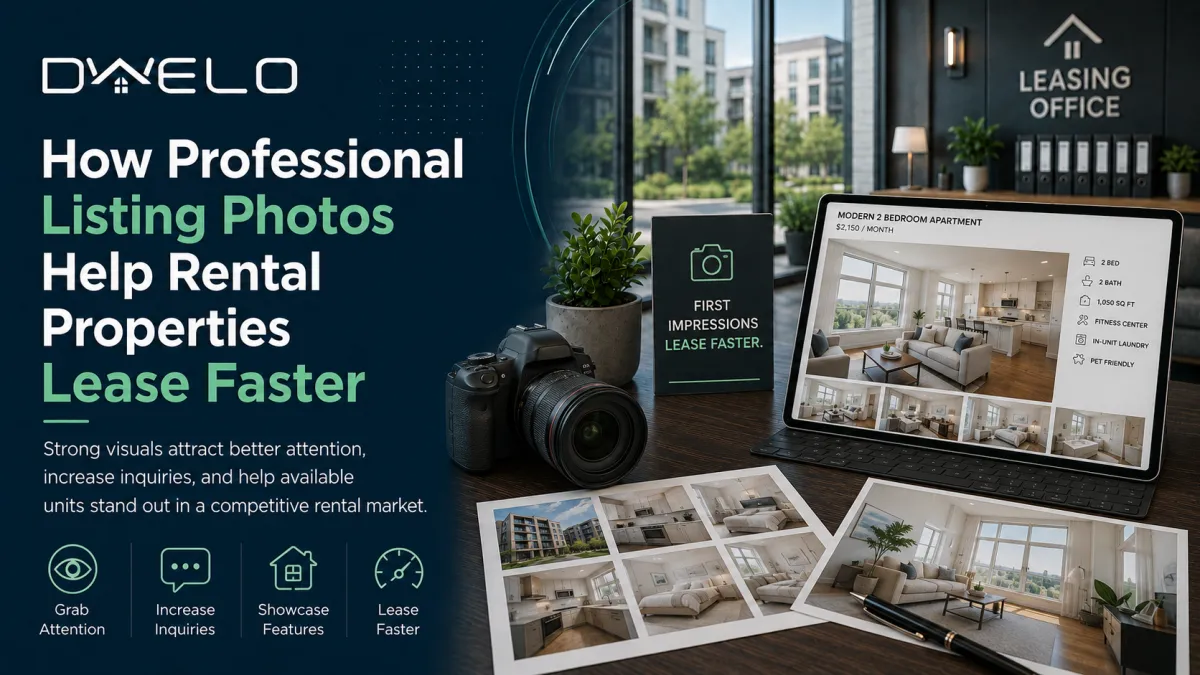
How Professional Listing Photos Help Rental Properties Lease Faster
Professional listing photos are the single most powerful tool for leasing rental properties faster. Learn why visuals drive tenant decisions in South Carolina's competitive market.
A prospective tenant in Charleston opens their phone during a lunch break and starts browsing available rentals. They're searching Zillow, Apartments.com, or Facebook Marketplace, whatever platform they found most useful last time. They scroll quickly. Very quickly. A listing with dark, cluttered, smartphone photos receives approximately the same consideration as a listing with no photos at all: they swipe past it before a conscious decision is made.
Then they reach a listing with bright, wide-angle, professionally composed images. The kitchen looks spacious. The natural light in the living room is striking. The primary bedroom feels like a room someone would genuinely want to sleep in. They stop scrolling. They read the description. They request a showing.
This is not a hypothetical. It is the documented behavior of rental searchers in today's market, and it explains why professional listing photos for rental properties are not a premium upgrade for high-end units or large portfolios. They are the baseline requirement for competing in any South Carolina rental market where prospective tenants have alternatives, which is to say, every South Carolina rental market.
For property owners who want to reduce vacancy periods and lease properties faster, professional photography is the single highest-leverage marketing investment available. This blog explains why, and what it looks like in practice.
How Tenants Actually Search for Rentals Today
Understanding why photography matters requires understanding how the modern rental search actually works.
The average rental search begins online. Platforms like Zillow, Trulia, Apartments.com, and Realtor.com aggregate listings and present them in a visual feed format, a grid or list of thumbnail images that tenants scroll through rapidly before selecting listings for closer review. The thumbnail is almost always a photograph.
On these platforms, a tenant searching in a given zip code or neighborhood may see anywhere from a dozen to several hundred listings simultaneously. The mechanics of that environment are unforgiving: if a property's lead photo doesn't generate interest within the first few seconds of visual contact, the listing is passed over. The tenant never reads the description, never considers the floor plan, and never learns that the property is priced competitively, has an updated kitchen, or is within walking distance of a trail they would love.
The photograph is not just part of the marketing; it is the gatekeeper. Everything else a landlord or property manager does to present the property well is downstream of whether the photos earn the click.
Now layer onto this the reality that mobile search has become dominant. A significant and growing proportion of rental searches happen on phone screens, where images fill the entire viewport and text is secondary. On a phone screen, a dark or unflattering photo is not just less appealing; it is actively unappealing, communicating something negative about the property before a single word is read.
What Professional Photography Actually Changes
The difference between amateur and professional listing photography is not simply a quality difference. It is a perception difference, and in rental property marketing, perception drives inquiry volume, which drives the size of the applicant pool, which determines both leasing speed and tenant quality.
Lighting Is the First Variable That Professionals Control
Amateur listing photos taken with a smartphone in natural room lighting typically produce images that are either too dark, unevenly lit, or washed out near windows. Interior photography is technically demanding because the dynamic range of interior lighting the difference between the brightest and darkest areas of a room exceeds what most phone cameras handle well without correction.
Professional real estate photographers use equipment and techniques specifically designed for interior environments: wide-angle lenses that capture the full scale of a room, controlled flash setups that balance interior light with natural window light, and post-processing that produces images that look as close as possible to how the room actually feels to someone standing in it.
The result is photographs that make rooms look bright, inviting, and accurately proportioned, rather than dim, cramped, or distorted. In a rental search environment where a tenant's first impression of a property is formed by a thumbnail image, this difference in perceived quality has a direct and measurable impact on inquiry rates.
Composition Communicates Value
Beyond technical lighting, professional photographers understand how to compose a shot to make a property look its best. This means choosing the angle that makes a room appear largest, staging furniture and personal items to eliminate visual clutter, capturing focal points a fireplace, a view, updated cabinetry that prospective tenants will respond to, and sequencing the photos to tell a coherent story about the property from entrance to living areas to private spaces.
A listing with well-composed professional photos communicates something important beyond the visual content of the images themselves: it signals that this is a professionally managed property where attention to detail is the standard. For prospective tenants evaluating multiple options, that signal matters. A property marketed with professional photography reads as one where the landlord takes ownership seriously, and tenants who are themselves serious about where they live respond to that signal.
The Direct Connection Between Photography and Leasing Speed
The business case for professional listing photography is ultimately about time and money. Specifically: the relationship between the quality of listing visuals and the speed at which a property leases, and the cost of every day that speed is reduced.
A rental property in Charleston that rents for $2,000 per month generates approximately $67 per day in rental income. A vacancy that lasts 45 days costs $3,015 in lost income. A vacancy that lasts 20 days costs $1,340. If professional photography reduces the average vacancy duration by even two to three weeks, a conservative estimate for a well-photographed versus poorly-photographed property in a competitive market, the financial return on that investment is immediate and substantial.
The mechanism is straightforward: professional photos generate more inquiries. More inquiries produce more showings. More showings create a larger applicant pool. A larger applicant pool produces faster placement and, critically, better-qualified tenants, because the selection process is operating with more options rather than fewer.
This is why Dwelo's professional property marketing services include professional photography as a standard component of the marketing process for every property we manage, not as an elective service for owners who request it, but as the baseline from which every listing campaign begins. The economics justify it unambiguously for every property at every price point.
What Makes a Set of Listing Photos Effective
Not all professional photography is equally effective. Understanding what distinguishes great listing photos from merely professional ones helps owners evaluate what they're receiving and recognize the standard worth insisting on.
Volume and Coverage
An effective listing photo set covers every room in the property, not just the most photogenic ones. Tenants who see a living room and kitchen but no bedrooms or bathrooms will assume there is a reason those rooms weren't shown. Coverage builds confidence. Missing rooms plant doubt.
Exterior and Entry Shots
The exterior of a property and the entry experience matter to prospective tenants, particularly those searching in South Carolina's coastal and suburban markets where outdoor living is part of the lifestyle. Front elevation shots taken in good light, any significant outdoor features, yards, patios, parking, and the entry itself all belong in a complete photo set.
Preparation Before the Camera Arrives
Professional photography works best on a prepared property. This means Dwelo's process includes guidance on property preparation before a photographer is scheduled: decluttering interior spaces, ensuring all light fixtures are functional, removing personal items from countertops and surfaces, and addressing any minor cosmetic issues that would show unfavorably on camera.
The property maintenance and repairs work that precedes a listing touch-up paint, fixture replacements, carpet cleaning adds value when it's captured by professional photography. A freshly maintained property photographed poorly is an opportunity wasted. The same property photographed well is a listing that performs.
Seasonal and Time-of-Day Considerations
For South Carolina coastal properties in particular, the time of day and season in which photographs are taken meaningfully affect their impact. Morning or late-afternoon exterior shots with good natural light showcase properties dramatically more effectively than overcast midday photography. Seasonal landscaping, poolside areas, or outdoor entertaining spaces photographed at their best, during active seasons, in flattering light, tell a far more compelling story than photos taken whenever convenient.
Real-World Scenarios: Photography That Changed the Outcome
Scenario 1: The Listing That Had Been Sitting
A property owner in Summerville had been managing her own listing for six weeks without a signed lease. The property was priced appropriately for the market, had been recently updated, and was in good condition. The listing photos, taken on a smartphone, showed rooms that looked smaller and darker than they actually were. After transitioning to Dwelo's full-service property management in South Carolina, we relisted the property with professional photography. Inquiry volume increased materially within the first week, and the property was under a signed lease within eighteen days of the relisting, without any change to the rental price.
Scenario 2: The Coastal Property That Leased Off-Season
An Isle of Palms property owner expected that a mid-autumn vacancy would be difficult to fill quickly given seasonal demand patterns in coastal markets. Dwelo scheduled professional exterior photography during a morning with exceptional light, capturing the property's outdoor features, a deck, mature landscaping, and proximity to access paths, at their visual best. The resulting listing communicated the lifestyle value of the property even outside peak season. Multiple inquiries arrived within the first week, and tenant placement and screening were completed with a well-qualified long-term tenant before the end of the month.
Scenario 3: The Portfolio Owner Who Standardized Photography Across All Units
A Columbia investor managing six rental properties had applied inconsistent marketing standards across his portfolio, some units photographed professionally, others with smartphone images, depending on the property manager handling each one. After consolidating management with Dwelo, professional photography became the standard for every unit, regardless of price point or location. Average days-on-market across the portfolio dropped across the following leasing cycle, and the owner attributed the consistency of marketing quality as a direct factor in improved leasing velocity portfolio-wide.
Key Benefits of Professional Listing Photography
Higher Inquiry Volume
Professional photos generate significantly more clicks, views, and inquiries than amateur alternatives on the same platforms at the same price point. More inquiries mean more showings and a faster path to a signed lease.
Larger, Better-Qualified Applicant Pool
More inquiries produce more applications, which gives the screening process more options to work with. Better selection produces better tenants, the compounding benefit of strong marketing that extends well beyond the initial leasing period.
Shorter Vacancy Periods
The direct financial impact of faster leasing is measurable. Every day of vacancy eliminated by better marketing is a day of rental income recovered. Across a full ownership horizon, the cumulative impact of consistently shorter vacancy periods is substantial.
Stronger First Impression and Property Positioning
A property photographed professionally reads as one that is managed professionally. This perception shapes how prospective tenants evaluate the property from their first impression onward, and first impressions in rental searches are formed in seconds.
Competitive Advantage in Active Markets
In South Carolina's most competitive rental submarkets, Charleston, Mount Pleasant, and Greenville, the difference between a listing that leases in two weeks and one that sits for six is often the quality of the visual presentation, not the property itself. Professional photography is how you compete on the same platform as every other listing, and win.
The Photo Is the Product, Until the Tenant Walks Through the Door
In today's rental market, the listing photo is not a supporting element of the marketing strategy; it is the marketing strategy, right up until the moment a prospective tenant arrives for a showing. Every decision an owner makes about pricing, platform distribution, listing copy, and advertising reach is conditioned on whether the photos first earned the click that made any of it possible.
Professional photography is how you ensure the property you've invested in, maintained, and priced thoughtfully gets seen, not scrolled past.
Real estate agents with South Carolina investor clients who are losing days to avoidable vacancy can connect their clients with a management team that treats photography as the standard it is through our agent referral program.
Ready to lease your rental property faster with professional marketing that starts with the right photos? Schedule a free consultation with Dwelo and let's talk about how we put your property's best presentation to work from day one.
Dwelo Property Management provides comprehensive, full-service rental property management across South Carolina, including Charleston, Mount Pleasant, Isle of Palms, Columbia, Greenville, Spartanburg, Summerville, and surrounding communities.


