
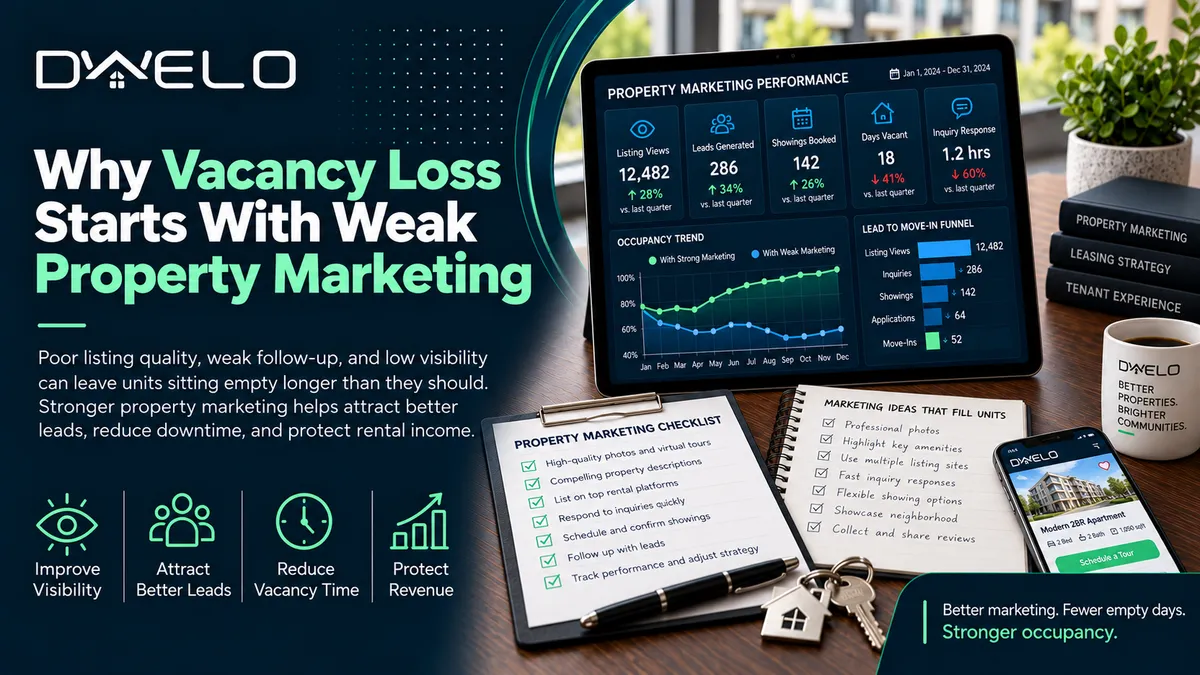
Why Vacancy Loss Starts With Weak Property Marketing
Weak property marketing can increase rental vacancy loss. Learn how better photos, pricing, listings, and lead follow-up help Charleston owners attract tenants.
A rental property can be clean, well-maintained, and located in a desirable neighborhood, yet still sit vacant longer than expected. The owner sees an empty home and assumes the market is slow. But sometimes, the real problem started weeks earlier, when the property was first advertised.
Property marketing plays a bigger role in rental performance than simply getting a listing online. Poor photography, unclear descriptions, unrealistic pricing, and delayed responses can quietly discourage prospective tenants before they ever schedule a showing.
For property owners in Charleston and the surrounding Lowcountry, understanding these early marketing mistakes is one of the most practical ways to reduce avoidable vacancy loss.
The Hidden Cost of Weak Property Marketing
Every vacant day represents rental income that cannot be recovered once the day has passed.
Consider a property renting for $2,100 per month. Using a simple 30-day calculation, ten additional days without a tenant represent approximately $700 in lost gross rental income. That doesn't include ongoing expenses such as mortgage payments, insurance, utilities, or property upkeep.
The frustrating part is that vacancy loss isn't always caused by a lack of interested renters. Sometimes potential tenants simply never make it far enough into the leasing process.
A listing might receive views but generate few inquiries. People may ask questions but never schedule a tour. Others may visit the property but decide not to apply because the home doesn't match their expectations.
Each of these situations points to a different marketing problem. Increasing advertising exposure without identifying the underlying issue may only repeat the same results.
Why the First Impression of a Rental Listing Matters
Most prospective tenants form their initial impression of a property long before visiting it.
They compare photos, monthly rent, available amenities, location, and move-in dates across multiple listings. If important details are missing or the images fail to show the home clearly, moving to the next option takes only a moment.
Three common weaknesses can reduce listing performance.
Poor photography: Dark rooms, awkward angles, and incomplete photo galleries make it difficult to judge a property's layout and condition. Bright, accurate images help renters understand what they are considering.
Generic descriptions: Phrases such as "beautiful home in a great location" provide little useful information. Specific details about parking, storage, outdoor space, appliances, and lease terms are more helpful.
Inconsistent information: Conflicting availability dates, missing pet policies, or unclear fees create unnecessary questions and hesitation.
Better presentation isn't about making a property appear more luxurious than it is. It's about helping renters confidently decide whether it fits their needs.
Rental Pricing Can Make or Break Marketing Performance
Even a professionally photographed property can struggle when its asking rent doesn't reflect the current market.
Charleston's rental market includes historic downtown homes, suburban single-family properties, apartments, and newer developments. Two properties with similar square footage may compete very differently depending on neighborhood, condition, parking, and amenities.
A successful rental pricing strategy considers comparable available properties rather than relying exclusively on past rental rates or an owner's preferred return.
Overpricing can reduce inquiries and extend vacancy. Pricing too low may attract attention but unnecessarily limit potential income.
The objective is to find a competitive position that supports both leasing activity and the owner's financial goals.
For owners exploring Charleston property management, a property-specific assessment can help account for these differences before the listing goes live.
The Shift From Posting Listings to Managing the Leasing Process
Traditional rental marketing often follows a simple routine: publish an advertisement, wait for inquiries, and arrange showings when someone responds.
The weakness is what happens between those steps.
A prospect who contacts three properties may receive one immediate response, one reply the next afternoon, and no response from the third. Even if the third home is attractive, the renter may already be moving forward elsewhere.
A more organized approach connects every stage:
Listing preparation and distribution
Inquiry tracking and timely responses
Showing coordination and reminders
Application instructions and follow-up
Consistent screening and leasing handoffs
Digital scheduling, shared inquiry records, and organized communication workflows can reduce administrative delays. Their value is not simply automation; it is making sure interested renters receive clear next steps without unnecessary waiting.
How Dwelo Connects Marketing With Tenant Placement
Strong marketing should lead naturally into leasing rather than end when a prospect clicks on a listing.
Dwelo's property marketing services focus on rental readiness, useful photography, accurate property information, realistic pricing context, and inquiry follow-up.
The process begins by reviewing the property's condition, availability, and positioning. Once the listing is prepared, inquiries need to move into organized showings and applications.
This is where coordinated tenant placement and leasing becomes important. Applicants shouldn't have to restart the process or repeatedly provide information simply because responsibility changes hands.
Consistent tenant screening also supports clearer decisions. Written, lawful criteria help owners evaluate applicants fairly while keeping documentation and leasing steps organized.
Connecting these activities creates a more dependable experience for prospective renters and greater visibility for property owners.
What This Looks Like in Real Charleston Rental Scenarios
Scenario 1: A Mount Pleasant Home With Plenty of Views but Few Inquiries
Imagine a three-bedroom property attracting online views without generating many showing requests.
The photos appear dated, the description doesn't mention the fenced backyard, and the asking rent is above similar available homes.
Instead of purchasing more advertising, the owner reviews comparable listings, updates the photography, and improves the property description.
These changes address the reasons renters may be passing over the listing rather than simply trying to reach more people.
Scenario 2: A West Ashley Rental Losing Prospects During Follow-Up
A prospective tenant requests a showing on Monday but doesn't receive a response until Wednesday.
By then, they may have toured another property or submitted an application elsewhere.
A defined inquiry-management process with prompt responses, clear showing availability, and organized follow-up can reduce these avoidable delays.
Scenario 3: A Summerville Property Listed Before It Is Ready
An owner advertises a home while repairs and cleaning are still underway.
Prospective tenants arrive expecting the condition shown in the listing, only to find unfinished work and an uncertain move-in timeline.
Coordinating rental readiness before marketing helps set accurate expectations and reduces the risk of disappointing otherwise interested applicants.
These are illustrative examples, but each shows how vacancy can be influenced by decisions made before a lease is signed.
The Marketing Metrics Property Owners Should Actually Watch
More listing views don't automatically mean better marketing performance.
Owners should evaluate how prospective tenants move through the leasing process.
Useful indicators include:
Listing inquiries: Are renters responding to the advertised property?
Showing conversion: How many inquiries become scheduled visits?
Application activity: Are showings producing serious, qualified applications?
Response time: How quickly are prospective renters receiving answers?
Days on market: How long does the property remain available before a lease is secured?
Patterns matter more than isolated numbers.
For example, strong inquiry volume with few showings may indicate communication or scheduling friction. Numerous showings without applications may point toward pricing, property condition, or a mismatch between the listing and reality.
Tracking these stages makes it easier to identify what needs improvement.
The Long-Term Value of Better Rental Marketing
Effective rental marketing supports more than a shorter vacancy period.
Lower potential carrying costs: Reducing avoidable vacant days can help protect rental revenue.
Greater operational efficiency: Organized inquiries and showings reduce repeated administrative work.
A better prospective tenant experience: Clear information and timely communication help renters make informed decisions.
More scalable property management: Repeatable processes make it easier to maintain consistency across multiple rental properties.
These benefits depend on market conditions and execution, but they give owners a practical reason to treat marketing as an essential management function.
Vacancy Prevention Begins Before the Property Is Empty
The strongest rental marketing strategy often starts before the current tenant moves out.
Reviewing lease timing, identifying necessary repairs, preparing accurate photos, evaluating asking rent, and organizing the showing process can reduce avoidable gaps between tenancies.
Not every vacancy can be prevented. Market conditions, property requirements, and tenant decisions still influence leasing timelines.
But preventable marketing delays shouldn't become an accepted part of owning rental property.
For Charleston-area owners, the question isn't simply whether a property is listed. It's whether every step from the first impression to the completed application is helping qualified renters move forward.
If your property is receiving limited interest or spending longer on the market than expected, you can request a free consultation with Dwelo to review its current rental positioning and identify possible improvements.
A successful lease starts with a well-marketed property, not just an available one.


